
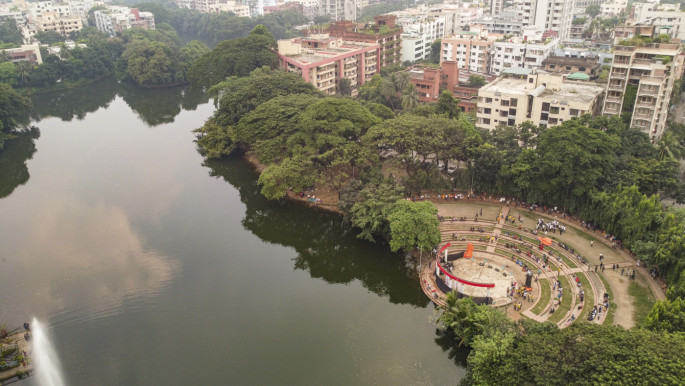
 © Olid ebna shah
The first thing that reached me was not the water. It was the smell. Sharp, stale, unmistakable. I was sitting on a rickshaw near Dhanmondi Lake, late for a meeting, when a place that once taught me calm suddenly felt unrecognizable. This was where my father held my hand. Where my Pohela Boishakh began. Where silence used to live. Standing there, I asked myself a question I had avoided for years. At what point did we stop seeing this wetland as alive?
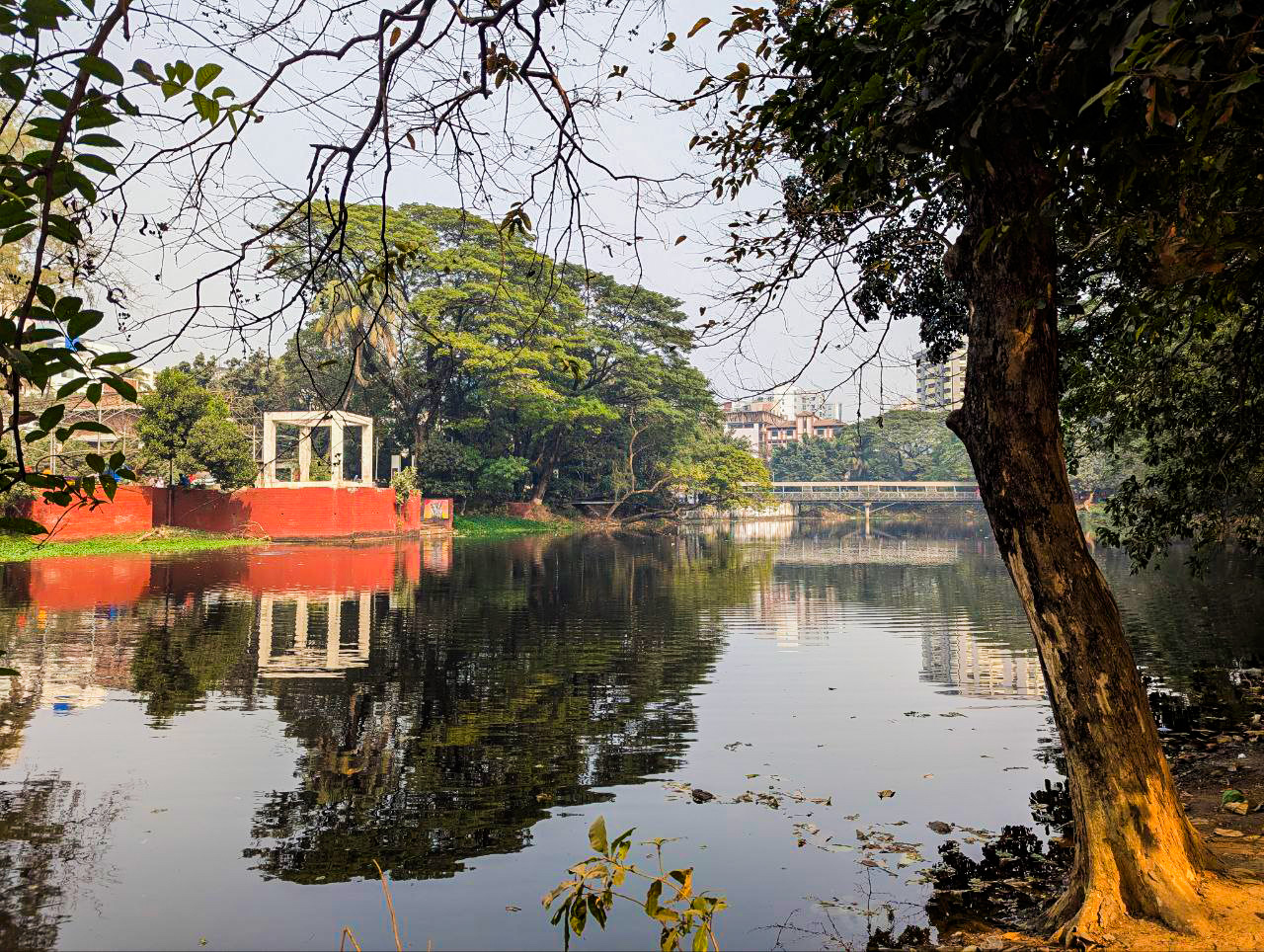 Before the water came into view, the odour announced the lake. © Elma Wazed
It was a busy weekday in last week. I was rushing to a meeting and stuck in a traffic jam near No. 8 bridge at Dhanmondi Lake on a rickshaw, a rush of memories hit me. This lake holds my childhood happiness and my teenage mistakes.
During my childhood, I used to come here after classes to play with my father. Every Pohela Boishakh felt incomplete without a visit to Rabindra Sarobar. I often wondered where this wetland came from in the middle of such a busy city, how it made all of Dhanmondi feel calm and spacious. My father would explain that Dhanmondi Lake is actually a dead channel of the Karwan Bazar River, connected to the Turag River. He also told me that it is partly linked and flows all the way to Hatirjheel. Back then, I imagined Hatirjheel as a vast, fresh wetland. Now I understand that this connection is slowly contaminating Dhanmondi Lake.
I grew up believing this lake was permanent, something that would always be here, unchanged.
-I found myself thinking as the rickshaw inched forward.
When I entered my teenage years, the lake became my refuge. It was a place to disappear when things felt heavy, a quiet witness to the awkwardness and intensity of growing up. That illusion broke when the smell of the water reached me. The stench forced a blunt question. Is this really the same lake?
I looked at the murky surface and the answer was hard to ignore. In the name of commercialization and so-called development, we have damaged one of the city’s most important urban wetlands.
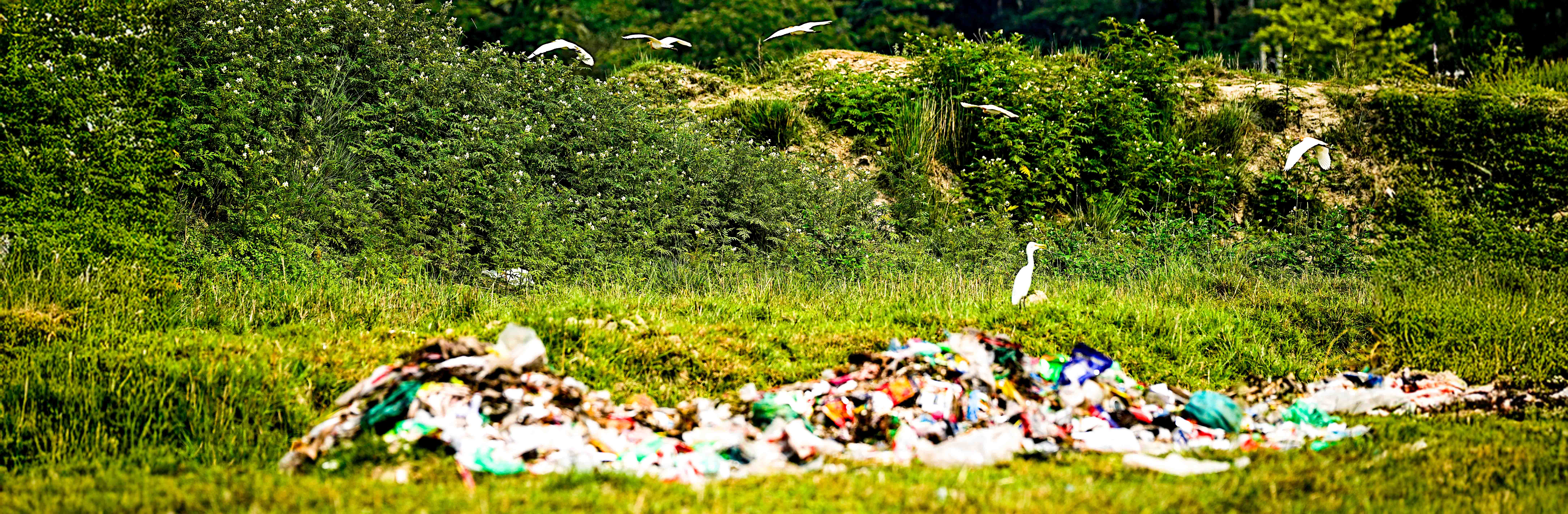
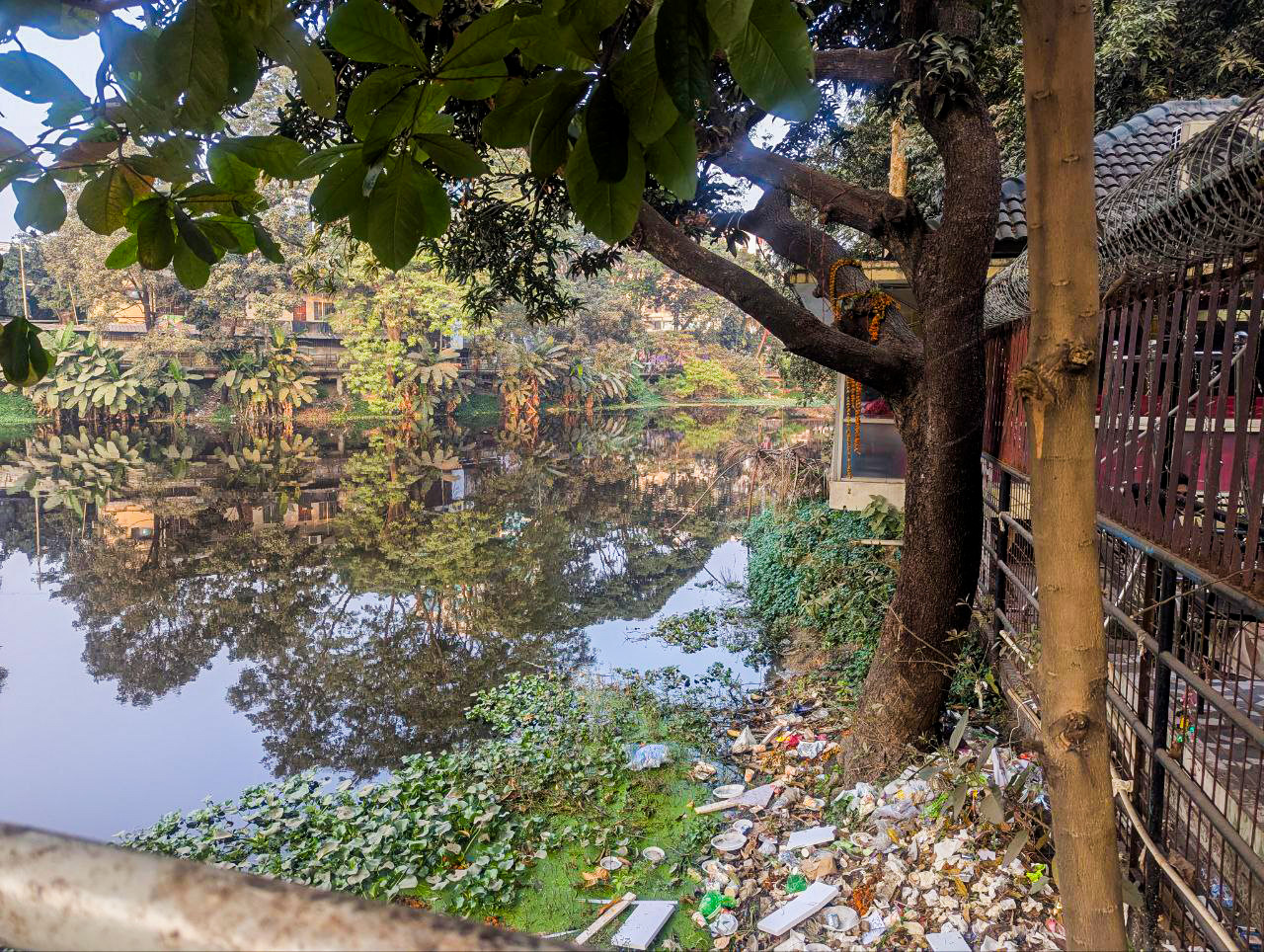 Garbage has become the most familiar presence in Dhanmondi Lake © Elma Wazed
Pollution is now one of the most visible threats to Dhanmondi Lake. Plastic waste, discarded bottles, food wrappers, and household garbage float across the water. During my last visit, I noticed excessive growth of water hyacinth, a fast-spreading invasive plant that has created yet another ecological challenge. Restaurants built inside the lake, constant crowds from commercial events, food stalls lining the paths, loud traffic noise, and careless dumping of waste all contribute to the rapid decline of bird species.
Even a few years ago, the lake would come alive in winter with flocks of birds. This year, I saw mostly crows. Even sparrows seemed rare. During several visits, I noticed spots around the lake where drug use is common. Stagnant water has also worsened mosquito problems, creating safety concerns for visitors.
At some point, neglect becomes normal, and that is when damage turns permanent.
-I caught myself thinking.
Much of this has happened because of a shared mindset that someone else will clean it up. We failed as citizens when we assumed the city corporation alone would take responsibility, dumping both our waste and our duty into the lake and walking away.
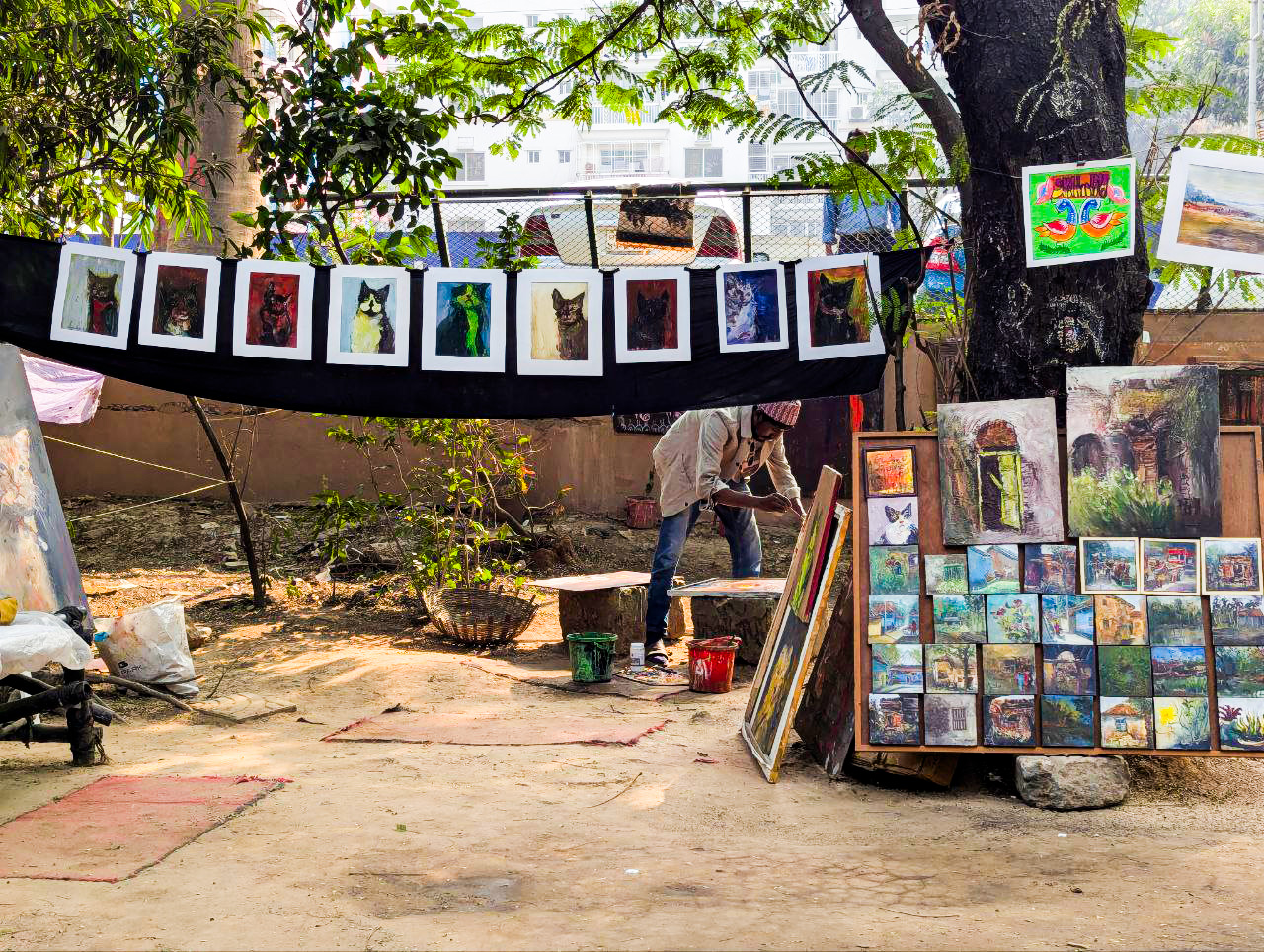 Despite its degradation, Dhanmondi Lake remains a place of life and movement © Elma Wazed
Preserving Dhanmondi Lake requires more than physical restoration. It requires emotional reconnection. Conservation lasts when people feel a relationship with a place, not just an obligation to follow rules. While walking along the lake, I met Rodosee Hoque, a participant in the “Layers of Dhanmondi Lake” project, which explores the hidden stories, memories, and everyday experiences tied to the lake. Listening to Rodosee, I realized how closely our feelings about this place aligned.
There’s honestly no other way than making people realize what a possession the lake is. Through our workshops, this became even more vivid to me.
- Rodosee Hoque, participant, Layers of Dhanmondi Lake
Now, whenever I pass by Dhanmondi Lake, I no longer see just water. I see a city that expanded faster than its care for what sustains it. Beneath the murky surface, the lake reflects our neglect as clearly as it reflects the sky.
On this World Wetlands Day, I find myself wishing for a different future for Dhanmondi Lake. One where we pause, listen, and remember what this wetland has quietly given us. The question remains. Will we continue to walk past it as if it were invisible, or will we finally learn to care for it as something alive?
* The opinions expressed here are the author’s own and do not represent the official views of Arannayk Foundation.
Comments