 © AI
© AI
What does a safe workplace actually look like for women? At Arannayk Foundation, the answer lies in systems that shape everyday practice. From recruitment and leadership pathways to safeguarding and accountability mechanisms, institutional policies define how dignity, fairness and protection operate in real situations. This reflection traces how those commitments move from written documents into daily workplace culture.
Every year on International Women’s Day, the world comes together to celebrate women’s achievement by recognizing their strengths, leadership and contributions. Women empowerment is not only about celebration. It depends on strong systems and clear structures.
It requires policies that protect dignity, ensure fairness, and create safe spaces where women and marginalized groups can grow and succeed.
For women to grow, the workplace should be a space where women feel safe, respected and valued. The favorable culture for women must have been backed by organizational policies.
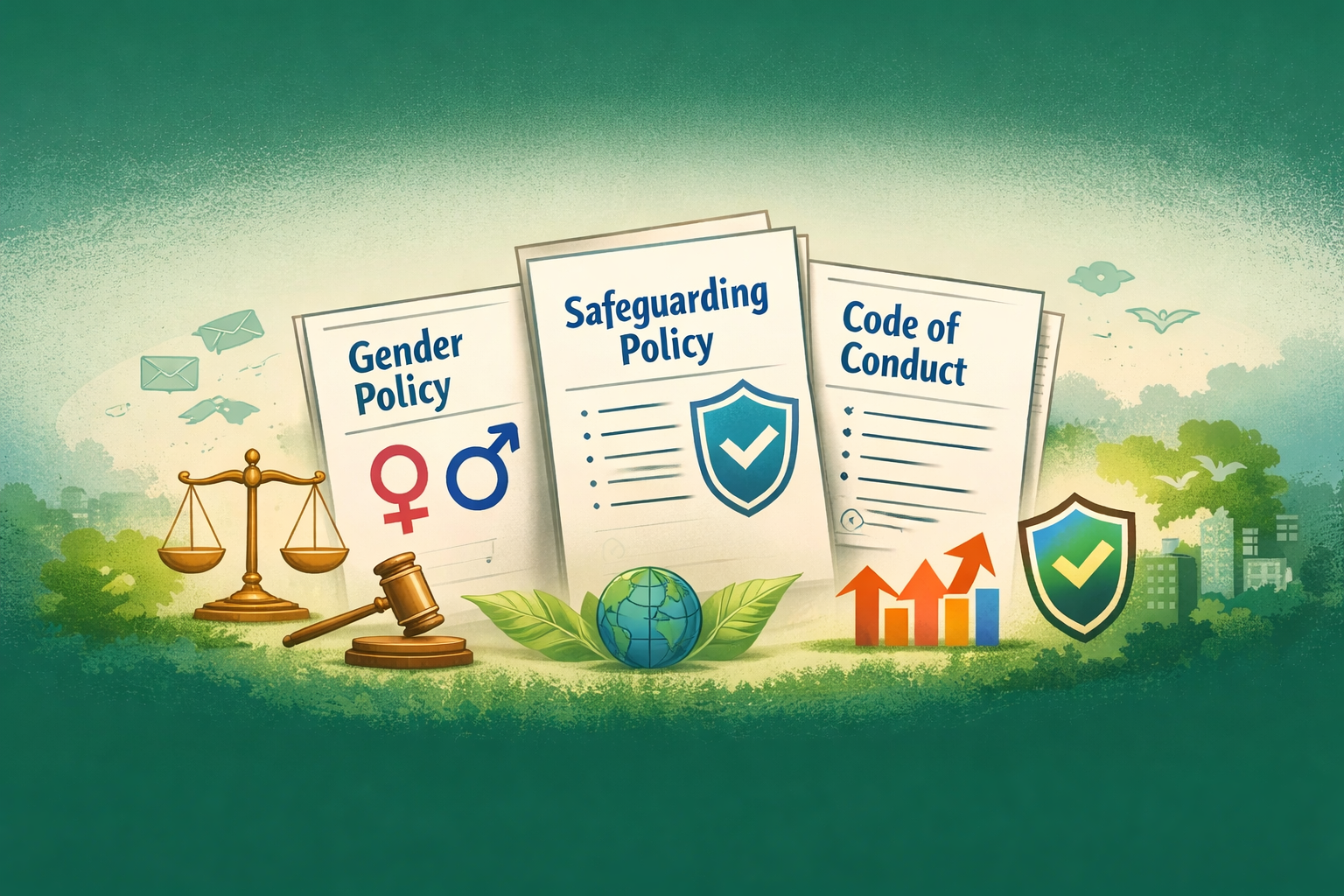
Arannayk Foundation has a range of policies, including- Code of Conduct, Gender Policy, Employment Ethics Policy, Equal Employment Opportunity Policy, Safeguarding Policy, Whistle Blowing Policy, Staff Safety and Security Policy, Prevention From Sexual Exploitation, Abuse and Harassment, SEAH Referral Mechanism, Fraud Prevention Policy, Child Protection Policy, Gender Equality and Social Inclusion (GESI) Policy and more.
All staff members and interns are required to familiarize themselves with these policies when they join the organization. As an intern with the Communications and Advocacy Unit, I also went through this process. Reading these documents offered a clear view of how institutional systems can protect women’s rights and promote a respectful workplace culture. This reflection explores how Arannayk Foundation’s policies translate commitments to gender equality into practical safeguards.
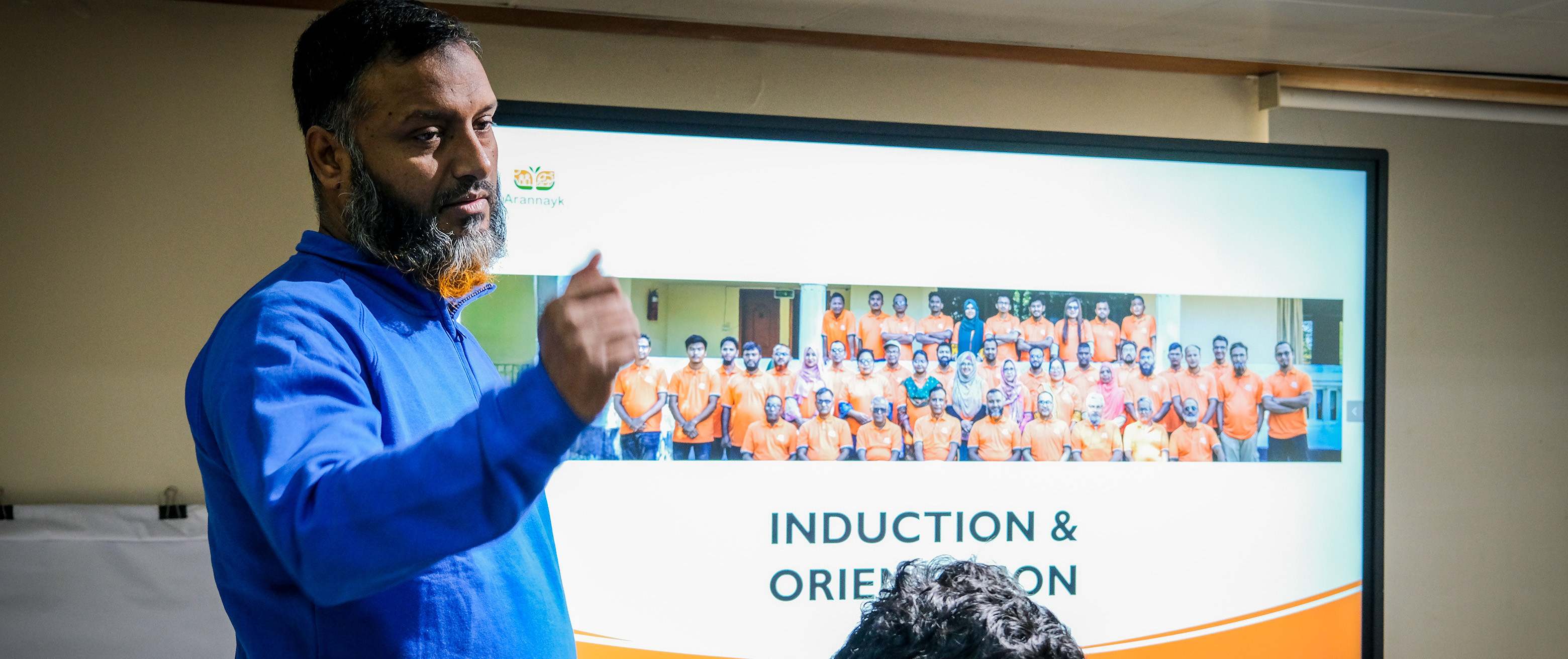 Executive Director Mohammad Abdul Motaleb, Ph.D conducting a session in Induction & Orientation program of HI-CAS project team. © Arannayk Foundation/Minhazul Ferdous
Gender as a Structural Commitment
The overall goal of Arannayk Foundation’s Gender policy is to establish clear standards and guiding gender equal principles by systems, programs, processes, and practices to make a world free from exploitation and discrimination where every individual has the opportunity to discover to their full potential.
Therefore, rather than treating women as a homogenous category, Arannayk Foundation adopts an intersectional lens and recognizes that inequality is shaped by multiple factors like age, disability, ethnicity, race, religion, sexual orientations, location and social class. This approach acknowledges a crucial truth that not all women experience marginalization in the same way. A key part of Arannayk Foundation is commitment to Gender Equality and Social Inclusion (GESI).
Arannayk Foundation makes gender equality part of its daily system and practices which goes beyond symbolic inclusion. Therefore, gender is included in human resource policies, performance reviews, and monitoring processes. Along with that, there are clear indicators within institutional systems.
For instance, staff receive training on gender equality and gender sensitive behavior. Also, equal opportunities are ensured for both men and women in access and use of informational technology during work. Another significant practice is that Arannnayk Foundation encourages women participation to increase their presence in decision making roles.
Most importantly, Arannayk Foundation Gender Policy emphasizes on gender transformation by promoting positive masculinities and engaging men as agents of changing harmful social norms which creates gender inequality. Because sustainable equality requires challenging those norms and power dynamics that promote gender inequality.
Arannnayk Foundation's Gender Policy represents an understanding of Practical Gender Needs (PGNs) which represents the needs women identify within their socially accepted roles. These needs do not necessarily challenge existing gender divisions of labor, but they respond to urgent realities such as access to water, healthcare, employment, and safe working environments. By addressing practical concerns like equal pay, maternity support, workplace safety, and access to complaint mechanisms, the organization acknowledges the living conditions that shape women’s participation.
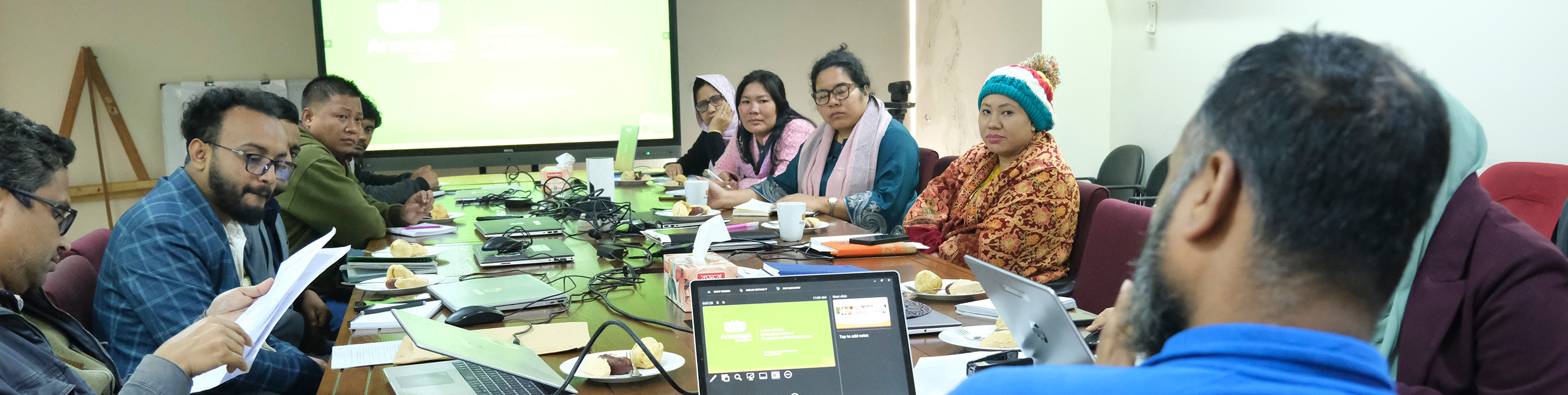 Newly onboarded HI-CAS project team of Arannayk Foundation participating in induction and orientation program. © Arannayk Foundation/Minhazul Ferdous
Protection and Survive Centered Safeguarding
Empowerment cannot exist without protection. Arannayk Foundation’s Prevention of Sexual Exploitation, Abuse and Harassment policy and Safeguarding Policy articulates a zero tolerance viewpoint which is aligned with international standards, including the UN Secretary-General’s Bulletin on Special Measures for Protection from Sexual Exploitation and Abuse (ST/SGB/2003/13) and the Inter-Agency Standing (IASC) Six Core Principles.
The safeguarding system is survivor-centered. Multiple reporting channels are available such as- phone, email, SMS, or direct reporting to designated focal points where confidentiality is prioritized. Survivors are not subjected to repeated questioning that may retraumatize them, so trained female personnel are available to handle sensitive interviews. There are clear timelines to guide response, for example, immediate safety measures within 24 hours, referral pathways within 72 hours, and ongoing monitoring thereafter.
The organization coordinates with national support mechanisms, including emergency helplines, for instance, National Emergency Helpline (999), the Women and Child Abuse Prevention Helpline (109), and legal aid organizations including Ain o Salish Kendra, BLAST, and BRAC Legal Aid.
Arannayk Foundation does not directly provide medical or psychological services, but it makes sure that it has a proper care system which is easy to access and active. It also strictly forbids any retaliation against those who make complaints. In addition, all individuals who breached the policy will face the same consequences regardless of position and reputation within the organization.
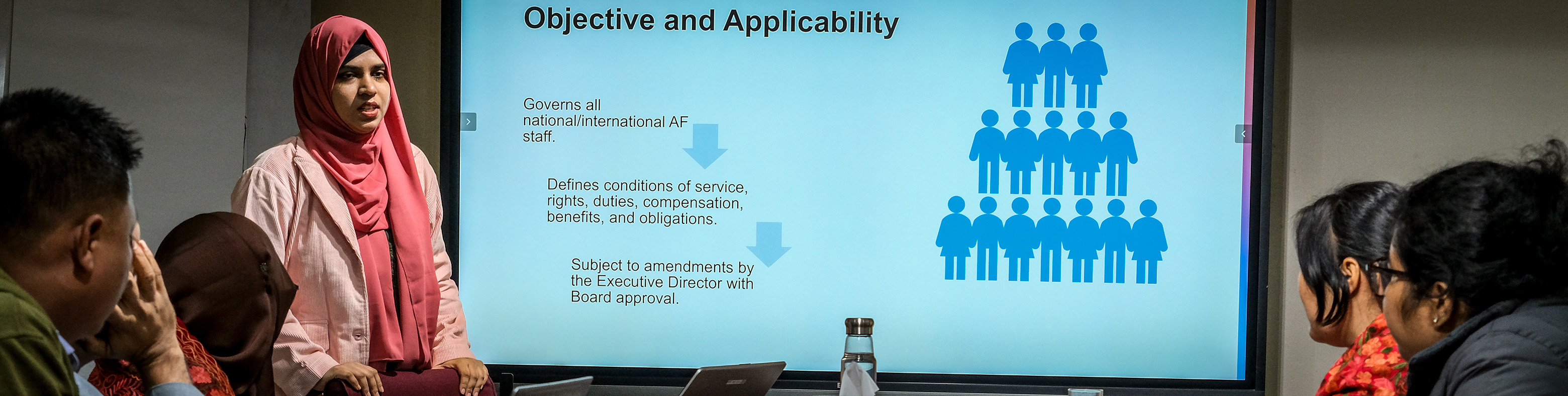 HR & Wellbeing Officer Sumona Shobnom facilitating a session on Code of Conduct as a part of regular staff training program © Arannayk Foundation/Minhazul Ferdous
Safety as a Culture, Not Just a Protocol
Any meaningful gender commitment must begin with behavior. Arannayk Foundation’s Code of Conduct sets standards that are applicable not only to staff, but also to volunteers, consultants, partners, contactors, and associated personnel. By aligning with international standards and prohibiting sexual exploitation, abuse, bullying, harassment and degrading behavior, the organization establishes a baseline of cultural relativism. These codes create a culture without gender discrimination in the workplace.
Furthermore, the Employment Ethics Policy makes the environment ethical by underlining equal treatment, non-discrimination, merit-based promotion and fair compensation where favoritism is rejected. It creates a safe environment in the workplace which is not only emotional and physical but also psychological and professional.
Moreover, the Staff Safety and Security Policy expand the concept of safety into three dimensions: emotional, professional, and physical. Emotional safety refers to being able to admit mistakes or raise concerns without fear which is particularly relevant for women navigating hierarchical workplaces. Professional safety reinforces fairness and non-discrimination, while physical safety is supported through security management plans and crisis protocols.
Another policy that creates safety as a culture is the Environmental and Social Safeguard Framework which integrates gender-responsive value chains, ensures Free, Prior and Informed Consent (FPIC) in land-related matters. By linking ecological justice with social equity, Arannayk Foundation recognizes that environmental degradation disproportionately affects women and marginalized communities.
From Policy to Practice
Policies provide structure and culture determine impact. Celebration of women achievements matter but sustainable empowerment requires systems that protect dignity, challenge inequality, and ensure that every individual regardless of gender or identity can work and participate without fear. Arannayk Foundation’s policies demonstrate that gender equality is not treated as a slogan. It is embedded in governance systems, accountability mechanisms and everyday workplace practices. When policies are taken seriously and implemented with integrity, they become more than documents. They become tools that strengthen trust, protect rights and support women’s leadership in meaningful ways.
* The opinions expressed here are the author’s own and do not represent the official views of Arannayk Foundation.
Comments